Blog

  • How to Get Motivated to Study

    Study motivation
    In the following, you can learn what you can do to get motivated to study.

    The ability to get motivated to study can have a very positive effect on a student’s study levels and grades. A motivated student will find it easier to go the extra mile and do all the necessary tasks that need to be done to assure success. The right motivation will allow students to study a lot more focused and with more concentration. Motivating yourself to study is especially helpful when you feel a lack of motivation or face procrastination during your studies. The following will show you what you can do to get motivated for studying. Also, be sure to have a look at Study Smart Not Hard and How to Focus on Studying to boost your academic accomplishments even further.

    The following tips on how to study effectively will help you to become motivated to study and to beat procrastination!


    How to become motivated to study?

    I. The motivational power of having a goal!

    A very powerful motivational technique students can apply is to set themselves well-thought-out goals and objectives. These aims could be either short-term goals (e.g. about an upcoming exam) or long-term goals (e.g. about the achievements you want to reach during your studies in the university). Objectives and aims are one of the best sources of motivation, as they will keep you focused and enable you to “do whatever it takes” to accomplish your goals. Furthermore, cleverly chosen objectives will inspire you to greater heights, allowing you to reach your true potential. A very positive side-effect of an excellent goal is that it will drastically increase your perseverance.

    Important tips for goal setting:

    • #1 Write your goals down
    • #2 Avoid vagueness, negations and necessities
    • #3 Split complex goals into main targets and sub-goals
    • #4 State how you intent to achieve your goal
    • #5 Visualize the accomplishment of your objective and what it feels like
    • #6 Gratification: reward yourself once the goal is reached

    For more details and an in-depth explanation on the above named aspects of the best goal setting strategies, visit How to set goals effectively?

    II. Gratification: Reward yourself!

    Personally, I don’t consider the act of rewarding oneself – once a goal is accomplished – as a motivational technique for students per se. However, the positive effect that a gratification can have on your motivation to study is stupendous. Hence I have no other choice other than including the fantastic aspect of gratification into this article. If you feel the urge to become motivated to study, set yourself a goal (as discussed in I. The motivational power of having a goal) and determine an appropriate reward once the objective is accomplished. It’s really that simple, but so effective. By rewarding yourself, whenever a goal is achieved, your brain elicits positive emotions, leading to the realization that an effort results in a positive reward. Furthermore, you will – consciously or subconsciously – recognize that a high effort will result in an even more positive gratification. In accord with the formula {high effort + accomplishment of the objective = gratification} you start linking hard work with a gratification. Basically, you will associate upcoming challenges (and necessary efforts to reach a goal) as another chance to get rewarded (= positive emotions). Hence you increase your motivation to study which allows you to maintain your motivation on a high level until the objective is accomplished. Also, your willingness to make an expenditure (e.g. studying) in order to accomplish the objective (e.g. an excellent grade) will raise, when having a reward in mind that you have desired for a long time. 

    Please keep in mind that this method can only stir your motivation to study as long as you apply the simple rule: {demanding objective = glorious reward} and {simple goal = small reward}. Also, it’s crucial that you DO NOT reward yourself if you fail. If you were not able to reach the objective as determined you will not get a reward. Furthermore, the reward should be received once the goal is reached, not any time prior to this.

    Important tips for rewarding yourself to become motivated to study:

    • #1 Set a goal & determine an appropriate reward for it’s accomplishment
    • #2 Associate the efforts you take with the positive reward
    • #3 Ambitious challenges require outstanding rewards
    • #4 Basic objectives should only be rewarded slightly
    • #5 Do not allow yourself to receive a reward if you fail
    • #6 Reward yourself subsequently after achieving the goal  

    III. Just do it & start studying

    I know that whenever you feel a lack of motivation to get started with studying, there are a dozen other activities that sound by far more interesting than studying. Sometimes you would rather watch TV, an episode of your favorite sitcom, the new movie that has hit cinemas, listen to music or hang out with your friends. The simple trick to overcome this dilemma is to just get going. Start studying, no matter what. “Boost” yourself to get started with studying, no matter if you feel tired or if the teaching material isn’t interesting at all. You might have to force yourself, but it is worth it.

    “It doesn’t matter where you go, as long as you get going.”

    Why am I recommending “to just do it“, whenever you lack the motivation to study? That’s simple. Forcing yourself will allow you to free your mind from all kinds of negative thoughts about being lazy or lacking the right motivation. Basically, instead of wasting important time worrying about being unenthusiastic and lazy (in short: playing the victim) you take action. You will notice that once you’re getting started “just for a couple of minutes“, time will fly by and you will get used to your tasks. Once you got into the habit of studying, it will feel just natural after a while to remain on your tasks for longer periods of time.

    Important tips to just get started with studying:

    • #1 “Force” yourself to do 15-20 minutes of studying for now
    • #2 Don’t agonize yourself by picturing the alternatives to studying
    • #3 Try not to procrastinate.
    • #4 The more you focus on your task, the faster you’re finished
    • #5 Imagine the negative consequences of prolonging studying
    • #6 If you’re tired, get up and jump on the spot, take a shower (or the like)
    • #7 Prevent distractions (TV, internet, email, telephone, smartphone)

    IV. One step at a time – avoid prolonging

    Let’s face it, one of the main reasons we students are not very enthusiastic about studying is the fact that we prolong studying for too long. As a result, we fail to grasp the subsequent teaching and learning contents, which forces us to become self-tutors that have to teach themselves everything that was missed. In the end, that’s a very time-consuming method of studying and a direct result of prolonging. The alternative is to constantly keep up with your tasks in college or university on a daily basis. This – by all means – doesn’t suggest that you will have to study for hours each day. Instead, it means that you keep going one step at a time, which allows you to grasp subsequent contents and to stay ahead with your tasks. If it takes you 10 minutes each day to organize and revise the contents you learned in the present day, that’s fine!  That way, you will understand what’s being discussed, thereby you can avoid the accumulation of gaps in knowledge.

    At the beginning of your term, you could write down the specific goals you aim to accomplish (as discussed in I. The motivational power of having a goal). Consider this to be your letter of motivation for the upcoming semester. Whenever you feel a lack of motivation or disinterest in studying, grab this letter and reassure yourself of the higher purpose of why you are studying. Realize that you have a “once in a lifetime” opportunity; you are young and entitled to study, so you might as well make the best of it by working and studying hard and by doing the best you can to get accepted at the destination of your choice. Otherwise, you might regret it at a later point in time.

    V. Music – there is no easier way to get motivated

    Music is a wonderful way to stir your motivation, as it elicits positive emotions. If chosen wisely, a song can get you powerfully motivated to study; it can cause a spirit of optimism which evokes the epic feeling of being able to do anything. When compared with other techniques to get motivated to study, listening to music is by far the simplest way to become excited about studying. As a rule of thumb, you shouldn’t opt for ballads, chill-out or lounge music. Instead, choose songs that you find motivating and inspiring, songs that immediately energize your whole body and make you smile from ear to ear. So, grab your headphones, turn on  your stereo equipment and listen to some fantastic songs, for instance, Jorge Quintero’s 300 violin orchestra.

    I really hope you like the song and if it stirred motivation then it’s even the better! In general, you can listen to any kind of music, as long as it energizes you, makes you happy and increases your motivation to “get going”. In the following, I’ve prepared a short list of suggestions for music that could help you to get motivated to study.

    Suggestions of very motivational songs:

    • #1 Steve Jablonsky – Arrival to Earth (Transformers Soundtrack)
    • #2 Daft Punk – The Game has Changed (Tron: Legacy Soundtrack)
    • #3 Hans Zimmer – Time (Inception Soundtrack)
    • #4 Paul Engemann – Push it to the Limit
    • #5 Nas ft. P. Diddy – Hate me now
    • #6 Queen – We Will Rock You
    • #7 Phil Collins – In the Air Tonight
    • #8 ACDC – Thunderstruck
    • #9 Blur – Song 2

    Hopefully I covered a broad range of tastes in music, for further suggestions see The Best and Inspiring Orchestral Movie Soundtracks and the Most Motivational Songs.

    VI. How bad do you want to succeed?

    The foundation of all motivation – not only the motivation to study – will make or break with one question, How bad do you want to succeed?“. If you want something bad enough and you really want it to happen, you are motivated to the hilt. It’s as simple as that; you know it and I know it. The question is, do you really – thoroughly – want to succeed in your graduation or study? And if not, why is that? Get to the bottom of this question and find out what you can do to make you want to succeed in school, college or university. Focus on the higher purpose of your education, i.e. getting enrolled in your favorite college/university, earning a door-opening degree or being recruited by that top employer you ever dreamed of. If you want to succeed in life bad enough, some lack of motivation to study will not be a difficult obstacle to overcome, will it?

    Important tips to increase your desire to succeed:

    • #1 Find out the reason why you are studying!
    • #2 What is your driving desire to succeed in school, college or univ.?
    • #3 Where do you want to be after finishing your education?

    VII. A positive approach!

    Your attitudes and mindsets about university/college can have a huge impact on your motivation! Having a mindset like: “University is a place where I face daily anxieties and get mentally tortured by all my professors” is not helpful and will not help you to get motivated. But if you have a positive attitude towards your studies (e.g. you see university/college as a chance to gain important knowledge, to develop yourself and to get ready to start your career) you will be able to boost motivation, just by having a positive attitude towards it. A positive approach towards your studies, your fellow students and professors will help you to keep your academic motivation on a constant high level.

    VIII. Negative feelings can kill your motivation!

    You will be confronted during your studies – every once in a while – with negative emotions such as anger, anxiety, and disappointment. These emotions can decrease your motivation drastically, which means you will begin to lack drive with negative results for your studies. My tip for you is to not waste your precious time and energy on negative feelings/emotions and attitudes towards professors, fellow students or situations you neither can change nor control. A lot of professors can be a real pain (see: How to deal with difficult professor personalities). The constant pressure to perform or the lack of social skills of some can be very frustrating. However, you are not able to change them, so anger would be an unnecessary and inefficient reaction towards their behavior. Pay their negative behavior back with excellent marks, instead! Anything else is contra productive (for you). The “pay back” attitude is also an interesting method for those who want to transform their negative emotions into even more motivation to study.

    IX. True interest!

    Another very effective motivational element that helps you to get motivated to study is your interest in the subject. True interest! If you are able to develop a true interest in what you are studying it will help you in becoming very motivated! If you know the difference between a task you dislike and an assignment you enjoy you know what I mean!

    Important tips to become truly interestd in studying:

    • #1 Get curious about the subject
    • #2 Read interesting books, magazines or articles on the topic
    • #3 Team up with others that are interested in the subject

    X. Beat procrastination and distraction!

    Procrastination – or any kinds of distractions – can have a negative influence on your ability to get motivated to study in general. Therefore it is important that you create a space to study where you do not get distracted by any means. Just by sitting in a room where you cannot procrastinate or distract yourself will help you to get started with your studies. Cut out any kind of distraction (TV, radio, mobile phone, internet, telephone, etc.) that could interrupt you while studying.

    I hope the above-mentioned motivation techniques Have helped you to understand how to get motivated to study! What are your tips and tricks to quickly get excited about studying? We’re excited to hear about your experiences.

  • 75 Funny Motivational Quotes

    Funny motivational quotes
    The following funny motivational quotes are both inspiring and humorous.

    Even the most ambitious among us struggle sometimes to get motivated. When problems and challenges abound in your life, it takes a lot of determination and motivation to keep going. During such difficult times, we all can make good use of something that quickly motivates us in a powerful manner. When you’re motivated to the teeth, you’ll be able to continuously push your own limits. The right motivation ignites the inner fire within you that keeps you going – no matter how difficult the going gets. A high level of motivation will also help you to never cease striving for true greatness. At the same time, when you’re brimming with motivation, you’ll always push yourself to do whatever it takes until you’ve accomplished your ambitious goals. Even further, who doesn’t love the powerful and inspirational effects of motivational quotes? However, what’s even better than mere quotes that get you motivated are funny quotes that boost your motivation. For this reason, we’ve compiled some of the funniest quotes of all time that are packed with funny motivation for you. Enjoy!

    Motivation can make a great difference in life. In fact, it’s the difference between mediocrity and greatness. Your level of motivation will also determine whether or not you’re able to continuously force yourself to do whatever it takes.

    “You can’t wait for inspiration. You have to go after it with a club.”
    Jack London

    At the same time, getting motivated and maintaining a high level of determination doesn’t have to be a serious undertaking. Quite the contrary, the more joy and fun you associate with motivating yourself, the more powerful will the results be.

    If you combine motivation with something to laugh about, you’ll get a powerful mixture. That’s why we’ve compiled the following selection of truly funny motivational quotes.

    75 Funny Motivational Quotes

    Humor can be quite an important asset – especially on your road to success. When you’re able to humorously look back at all your failures and setbacks, you’ll less likely to be discouraged by these past events.

    What is so beautiful about funny motivational quotes is that they stem from authors who themselves were confronted with challenges that often seemed larger-than-life. However, they not only found inspiring ways to deal with their problems but they also made some pretty funny observations. So let’s have a look at their funny and inspiring realizations.

    Enjoy these hilariously funny motivational quotes

    1.

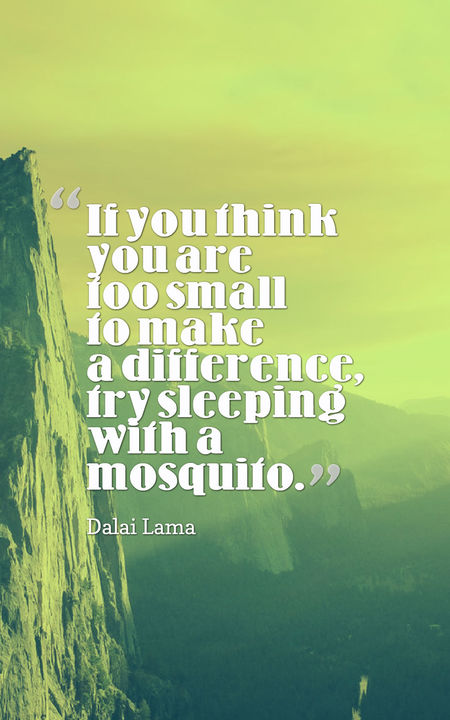
    “If you think you are too small to make a difference, try sleeping with a mosquito.“
    Dalai Lama

    Funny motivational quotes

    2.

    “Consider the postage stamp: its usefulness consists in the ability to stick to one thing ’til it gets there.“
    Josh Billings

    Funny motivational quotes

    3.

    “A diamond is merely a lump of coal that did well under pressure.“
    Unknown

    Funny motivational quotes

    4.

    “I have not failed. I’ve just found 10,000 ways that won’t work.“
    Thomas A. Edison

    Funny motivational quotes

    5.

    “Listen, smile, agree, and then do whatever you were gonna do anyway.“
    Robert Downey Jr.

    6.

    “Nothing is impossible, the word itself says ‘I’m possible’!“
    Audrey Hepburn

    7.

    “If you’re going to be thinking, you may as well think big.“
    Donald Trump

    8.

    “Opportunity does not knock, it presents itself when you beat down the door.“
    Kyle Chandler

    9.

    “Opportunity is always knocking. The problem is that most people have the self-doubt station in their heads turned up way too loud to hear it.”
    Brian Vaszily

    10.

    “Life is like a sewer… what you get out of it depends on what you put into it.“
    Tom Lehrer

    11.

    “We are all in the gutter, but some of us are looking at the stars.“
    Oscar Wilde

    12.

    “Learn the rules like a pro, so you can break them like an artist.“
    Pablo Picasso

    13.

    “If you’re going through hell, keep going.“
    Winston Churchill

    14.

    “If you hang out with chickens, you’re going to cluck and if you hang out with eagles, you’re going to fly.“
    Steve Maraboli

    15.

    “Only he who attempts the absurd is capable of achieving the impossible.“
    Miguel de Unamuno

    16.

    “The only way of discovering the limits of the possible is to venture a little way past them into the impossible.“
    Arthur C. Clarke

    17.

    “The elevator to success is out of order. You’ll have to use the stairs… One step at a time.“
    Joe Girard

    18.

    “There are no traffic jams along the extra mile.“
    Roger Staubach

    19.

    “Edison failed 10,000 times before he made the electric light. Do not be discouraged if you fail a few times.“
    Napoleon Hill

    20.

    “Change the way you look at things and the things you look at change.“
    Wayne W. Dyer

    21.

    “People often say that motivation doesn’t last. Well, neither does bathing – that’s why we recommend it daily.“
    Zig Ziglar

    22.

    “Luck is what you have left over after you give 100 percent.“
    Langston Coleman

    23.

    “It took me fifteen years to discover I had no talent for writing, but I couldn’t give it up because by then I was too famous.“
    Robert Benchley

    24.

    “It takes sunshine and rain to make a rainbow. There would be no rainbows without sunshine and rain.“
    Roy T. Bennett

    25.

    “Imperfection is beauty, madness is genius and it’s better to be absolutely ridiculous than absolutely boring.“
    Marilyn Monroe

    26.

    “Never go to bed mad. Stay up and fight.“
    Phyllis Diller

    27.

    “Life is like the stock market. Some days you’re up. Some days you’re down. And some days you feel like something the bull left behind.“
    Paula Wall

    28.

    “Good things come to those who wait… greater things come to those who get off their ass and do anything to make it happen.“
    Unknown

    29.

    “It takes less time to do things right than to explain why you did it wrong.“
    Henry Wadsworth

    30.

    “The road to success is dotted with many tempting parking spaces.“
    Will Rogers

    31.

    “Never doubt that a small group of thoughtful, committed, citizens can change the world. Indeed, it is the only thing that ever has.“
    Margaret Mead

    32.

    “Sometimes life knocks you [down]… get up, get up, get up!!! Happiness is not the absence of problems, it’s the ability to deal with them.“
    Steve Maraboli

    33.

    “The best way to cheer yourself up is to try to cheer somebody else up.“
    Mark Twain

    34.

    “Change is not a four letter word… but often your reaction to it is!“
    Jeffrey Gitomer

    35.

    “The man who moves a mountain begins by carrying away small stones.“
    Confucius

    36.

    “Goal setting is similar to traveling from point A to point B within a city. If you clearly understand what the goal is, you will definitely reach the destination because you know its address.“
    Thomas Abreu

    37.

    “Be yourself; everyone else is already taken.“
    Oscar Wilde

    38.

    “People say nothing is impossible, but I do nothing every day.“
    A.A. Milne

    39.

    “Even a stopped clock is right twice every day. After some years, it can boast of a long series of successes.“
    Marie von Ebner-Eschenbach

    40.

    “Opportunity is missed by most people because it is dressed in overalls and looks like work.“
    Thomas Eddison

    41.

    “If you fall, I’ll always be there.“
    The Floor

    42.

    “If you’re going to be able to look back on something and laugh about it, you might as well laugh about it now.“
    Marie Osmond

    43.

    “First they ignore you, then they ridicule you, then they fight you, and then you win.“
    Mahatma Gandhi

    44.

    “You must learn from the mistakes of others. You can’t possibly live long enough to make them all yourself.“
    Sam Levenson

    45.

    “If you try to fail, and succeed, which have you done?“
    George Carlin

    46.

    “If you don’t know where you are going, you might wind up someplace else.“
    Yogi Berra

    47.

    “Watching a person who successfully loses fifty pounds and changes her life is more inspirational than listening to a fitness coach with a perfect body.“
    Martin Meadows

    48.

    “Here is a test to find whether your mission on earth is finished: If you’re alive, it isn’t.“
    Richard Bach

    49.

    “Without ambition one starts nothing. Without work, one finishes nothing. The prize will not be sent to you. You have to win it.“
    Ralph Waldo Emerson

    50.

    “I always wanted to be somebody, but now I realize I should have been more specific.“
    Lily Tomlin

    51.

    “I believe that if life gives you lemons, you should make lemonade. And try to find somebody whose life has given them vodka, and have a party.“
    Ron White

    52.

    “I have a simple philosophy: Fill what’s empty. Empty what’s full. Scratch where it itches.“
    Alice Roosevelt Longworth

    53.

    “The only time I don’t have any problems in this world is when I am already six feet below the ground.“
    James Jason

    54.

    “I cannot afford to waste my time making money.“
    Louis Agassiz

    55.

    “When I was 5 years old, my mother always told me that happiness was the key to life. When I went to school, they asked me what I wanted to be when I grew up. I wrote down ‘happy’. They told me I didn’t understand the assignment, and I told them they didn’t understand life.“
    John Lennon

    56.

    “You have brains in your head. You have feet in your shoes. You can steer yourself any direction you choose. You’re on your own. And you know what you know. And YOU are the one who’ll decide where to go.“
    Dr. Seuss

    57.

    “Follow your passion, stay true to yourself, never follow someone else’s path unless you’re in the woods and you’re lost and you see a path then by all means you should follow that.“
    Ellen Degeneres

    58.

    “Failure is the condiment that gives success its flavor.“
    Truman Capote

    59.

    “It is not the answer that enlightens, but the question.“
    Eugene Ionesco Decouvertes

    60.

    “We don’t stop playing because we grow old; we grow old because we stop playing.“
    George Bernard Shaw

    61.

    “Never let your sense of morals prevent you from doing what is right.“
    Isaac Asimov

    62.

    “I find television very educational. Every time someone turns it on, I go in the other room and read a book.“
    Groucho Marx

    63.

    “The key to success is not through achievement, but through enthusiasm.“
    Malcolm Forbes

    64.

    “Whoever said, ‘It’s not whether you win or lose that counts,’ probably lost.“
    Martina Navratilova

    65.

    “I didn’t fail the test. I just found 100 ways to do it wrong.“
    Benjamin Franklin

    66.

    “Talent hits a target no one else can hit. Genius hits a target no one else can see.“
    Arthur Schopenhauer

    67.

    “When you do not know what you are doing and what you are doing is the best that is inspiration.“
    Robert Bresson

    68.

    “I intend to live forever. So far, so good.“
    Steven Wright

    69.

    “The minute you settle for less than you deserve, you get even less than you settled for.“
    Maureen Dowd

    70.

    “If you’re going to be able to look back on something and laugh about it, you might as well laugh about it now.“
    Marie Osmond

    71.

    “If you don’t design your own life plan, chances are you’ll fall into someone else’s plan. And guess what they have planned for you? Not much.“
    Unknown

    72.

    “All you need in this life is ignorance and confidence, and then success is sure.“
    Mark Twain

    73.

    “I’m bored’ is a useless thing to say. I mean, you live in a great, big, vast world that you’ve seen none percent of. Even the inside of your own mind is endless; it goes on forever, inwardly, do you understand? The fact that you’re alive is amazing, so you don’t get to say ‘I’m bored.“
    Louis C.K.”

    74.

    “Even if you are on the right track, you’ll get run over if you just sit there.“
    Will Rogers

    75.

    “Well-behaved women seldom make history.“
    Laurel Thatcher Ulrich

    I hope you enjoyed this collection of funny motivational quotes.

    Steve is the founder of Planet of Success, the #1 choice when it comes to motivation, self-growth and empowerment. This world does not need followers. What it needs is people who stand in their own sovereignty. Join us in the quest to live life to the fullest!

  • Uncover the Fountain of Fresh Starts Hidden in You

    We tell ourselves that we want a new life; in our minds we see our­selves reclaiming our right to live without limitations. We see our­selves walking away from destructive relationships and letting go of negative thoughts and feelings. And this is the very problem.

    We talk to ourselves about a fresh start and even plan the path we will take when things get right . . . but that’s it. We think, but rarely act. We dream, but won’t awaken to the one fact we must face if we would make a fresh start: The new beginning we long for is now or never.

    All of us know those high hopes we have that a new relationship, or change of career, will give us a new starting place in life. But we also know, at best, that these times and places in our lives are more like the momen­tary burst of a skyrocket than a permanent star on the horizon. And when the sizzle fizzles, we are right back where we started from, look­ing to change another set of conditions and calling this a fresh start.

    We cannot plan a fresh start in life; if we want a new life we must do something new. We must act in the Now — in that place where life itself is new all the time — beginning with call­ing upon the light of our new understanding to go before us. Here is what this means to us in practical terms:

    The fresh start we seek appears only as our old self disappears — only as we willingly die to who we have been. There are any number of ways to state this venerable wisdom, but the action required remains unchanged:

    If we wish to start our lives over new, the spiri­tual price is that we agree to no longer carry over our thoughts about ourselves from moment to moment.

    To this end, and to help us do what is needed to free ourselves, we need to see that while our habit of revisiting and then reliving past mental and emotional states may lend us welcome and familiar sensations, it also costs us our chance to know the newness of Now where our true self resides in a state of natural peace and power.

    As we work to be in the Now and strive to leave the old thought-self behind us, it will cry out something like this, “But you can’t live without me! Who will watch out for you and see to your well-being if not me?” And though it is necessary that you learn to craft your own answer to this trickster nature, this one is the enemy of all that is fresh, uncorrupted, and new. Here is one response worth remem­bering. Send this message out from your silently seeing heart to this deceptive foe of all fresh starts in life: “What I need, you cannot give me. What I long to see, you cannot show me. And what I hope to be, you cannot make of me. This con­versation has reached its end.”

    Then, remaining as awake to yourself as you can, just keep walk­ing ahead into the new and unknown Now. You need remember only one thing as you go: if you keep the light of your new understand­ing before you at all times, those shadows that would keep you from making a new beginning will remain behind you. Let this truth be your guide and watch how easy it becomes to let go of all that was in favor of all that is new, true, and you.

  • 7 Techniques How to Work Faster with Better Efficiently

    work faster

    Is it really possible to get 100% of your work done faster and with better efficiency? Can you really finish your work around noon time when others are grabbing their next cup of coffee but you’re already shutting down your computer and enjoying the rest of your day?

    In short, the answer is yes. You can get it all done and work faster if you want to. This is exactly what you are going to discover in this article.

    There is no doubt that we all have only 24 hours a day, but if you can work faster and get things done quickly, you will have more time for other stuff in your life.

    So here are the 7 techniques how you can deliver your work faster, with better efficiency, and without suffering the quality of your work:

    1. Allocate a time frame for your task

    No matter what kind of task you do, you need to allocate a time frame or a deadline for it.

    If you don’t allocate a time frame, guess what will happen, you will take as long as possible to get the work done.

    For example, if you need to write a report today, don’t leave the task open-ended without a time frame. Include a deadline for when you need to get the report done, say by 2 PM in the afternoon.

    When you have a clear deadline, you know exactly when to deliver the result.

    In business, there’s the Parkinson’s Law that states, “Work expands to fill the time allotted for it”. In other words, if you don’t allocate a time frame for when to get the work done, you will take as long as you can.

    If you have 3 days to complete the project, you will take 3 days to do it. If you have 24 hours to get the work done, then you will deliver the work within 24 hours.

    I found that this is true.

    For instance, I write my blog post every Tuesday and Thursday. And when I include a deadline for what time I should deliver the post, I will take as long as I need. Sometimes, I started at about 10 AM, and finish my article at around 4 PM. That’s a long time. And usually, my articles are at least 3,000 words.

    However, I will get my article done faster whenever I give myself a time frame, say by 2 PM I must deliver the article. And that’s exactly what I got by 2 PM.

    When I give myself a time frame, I become more focused and I know exactly what kind of result I must deliver, and by what time.

    This is why giving yourself a time frame on every major task is important.

    When you don’t allocate a time frame for your task, the Parkinson’s Law will kick in and you will take as long as you need to get the work done.

    2. End your day by 3 PM

    I learned this technique from an article on Forbes when doing research on this topic. The author of the article, Siimon Reynolds suggested his readers act as if their workday ends by 11 AM and they must get everything done by then.

    In my opinion, I believe that 11 AM is way too extreme. In my country, Malaysia, most people start their work from 9 AM to 6 PM. Hence, if you end your workday at 11 AM, you only work for 2 hours. And that’s a little too short.

    Hence, I suggest you treat it as if your workday ends by 3 PM or 4 PM.

    The key is to alter your mentality.

    When you think you can work until 6 PM, usually, you will waste most of your morning on unnecessary or unimportant work.

    Like what the article Siimon wrote in the article:

    “The average person has done virtually nothing of consequence by 11 AM; they have chatted with their co-workers, checked their emails, grabbed a coffee, and perhaps planned their day. They then complain they don’t have enough time to get their job done.”

    Therefore, change your thinking – act like you have to leave your office by 3 PM and you will have to get everything done before that.

    When you shifted your mindset, things will work out differently. Suddenly, you don’t have so much time to waste. And you will work faster because you really want to get things done faster and leave earlier, don’t you?

    3. Schedule your work before you start your day

    Another important technique that helps you become a faster worker is to schedule your work before you start your day.

    In other words, plan your day.

    I know that things may not go according to your plan, but planning is still necessary.

    When you go to the office without having a clear plan of what you need to do, first, you will waste your time thinking and scheduling work. Second, you become reactive and you respond to whatever that comes to you.

    Successful people who accomplish extraordinary results in life plan their day, and most even plan their lives.

    Like Sir Richard Branson. He said it in his blog post that one of the secrets to success is none other than having a to-do list.

    “The act of writing your tasks and thoughts down is useful as it helps to make sense of your ideas and give you focus,” wrote Branson on his blog.

    So don’t start your day without having a to-do list. It helps in knowing what you need to do so that you can waste no time and focus on getting the tasks done.

    Of course, you don’t want to overwhelm yourself by writing down 20 or 50 things to do.

    Most people only able to get 4 – 6 items done on a typical day. Thus, make sure you only schedule high-impact tasks that are really important to your to-do list.

    Scrap the thinking that more is better. When it comes to being productive, the Pareto’s Rule is king. Do and focus on what is important. Don’t try to do everything because you can’t.

    Here’s an interesting article you may want to read:

    30 Useful and Applicable Tips How to Have a Productive Day

    4. Wake up earlier

    One of the most direct ways to get your work done faster and earlier is to wake up early. When you start your day early, you can get things done earlier and have more time for other things.

    Here are some examples of successful people who wake up extremely early to get things done according to Huff Post:

    • Dwayne “The Rock” Johnson, one of my favorite movie stars, wakes up and hit the gym for his routine workout by 4 AM each day.
    • Jack Dorsey, the CEO of Twitter and Square gets up at 5 AM to meditate and exercise before he gets into the office.
    • Richard Branson, the billionaire behind Virgin Group wakes up around 5:45 AM to exercise and have breakfast before he starts his day.
    • And the famous billionaire investor, Warren Buffett wakes up at 6.45 AM and starts his day by reading the newspaper.
    • And the list goes on and on.

    Now, you don’t have to wake up as early as 5 AM if you don’t want to, but one thing you have to understand is that most successful people choose to wake up early so that they can kick-start their day in the right pace.

    Imagine if you wake up late and you have to rush to the office. You don’t have time for a good shower or a healthy breakfast. You don’t spend quality time with your loved ones and you have to rush to the office because you’re late. How do you think your day will turn out? Not good.

    As a blogger, I can wake up any time I want, but still, I choose to get up at 6.20 AM every day. I start my work between 9 to 10 AM. And I prefer to get up early so that I have plenty of time to prepare myself for the rest of the day.

    I will read in the morning, schedule my work, make breakfast, and sometimes even send my wife to work.

    So if you want to get your work done faster, get up early.

    5. Take micro-breaks

    This may sound contradicting, but trust me, taking micro-breaks throughout the day allows you to get your work done faster.

    You have to understand that we’re not machines. We’re humans. And being a human, we all need rests to recharge our energy, motivation, and willpower.

    If you always procrastinate, feeling exhausted at the end of your workday, or feel like you’re not making much progress even though you spend a lot of time on a task, it may be a sign you’re not taking enough breaks.

    Research has proved that taking regular short breaks can boost our productivity throughout the day. Our energy and willpower work just like our mobile phone’s battery.

    In the morning, if you have a good sleep the night before, your energy bar will be full at 100%. And as you start your day, get busy, and work on your stuff, you use your energy. So if you don’t take a break to recharge your battery, eventually, you will deplete it and feel exhausted.

    When you lack the willpower, it will be difficult to focus on your task at hand. This is why taking micro-breaks is important. You constantly recharge yourself to maintain your productivity by refreshing your mind through breaks.

    So how do you take micro-breaks? Here are some easy methods:

    Taking a break once an hour.

    There were studies showed that those who distract themselves for a break once an hour performs better than those who keep at it without taking a break.

    Move your body.

    As human beings, our bodies are not designed to sit around all day long. You need to move to increase your blood and oxygen flow. Hence, move your body or take a walk throughout the day.

    Take a tea break.

    We all know that tea can be good for us due to its antioxidants entities, but the act of taking time away from your work gives you time to slow down and refresh your mental energy.

    And if you want to learn more about taking breaks, read my previous article:

    13 Creative Ways How to Take Short Breaks During the Day

    6. Batch similar tasks together

    Want to work faster? Then batch your similar tasks together. This is easy to understand, but most people don’t do it.

    I used to jumble all my work together, but since a few months back, I started to follow Jack Dorsey’s “theme day” concept to approach my work.

    Being a CEO to both Square and Twitter, Dorsey needs to be extremely productive in managing his time. So how does he keep up with his job? This is what he said on Forbes:

    “The way I found that works for me is I theme my days. On Monday, at both companies, I focus on management and running the company…Tuesday is focused on product. Wednesday is focused on marketing and communications and growth. Thursday is focused on developers and partnerships. Friday is focused on the company and the culture and recruiting. Saturday I take off, I hike. Sunday is reflection, feedback, strategy, and getting ready for the week.”

    The concept of daily themes is effective because when you do so, you are batching similar tasks together and get them all done at the same time.

    As for me, on Tuesday and Thursday, which are my blogging day, I will write long-form content for my blog. Like writing this article right now, I devoted my entire day for content writing. And for Wednesday, I use this day for creating images for Pinterest and Facebook.

    After applying this concept for about 2 months, I can say that I’m able to work faster because I can focus better.

    When you allow yourself to focus on a task for long enough, you’re able to reach the ‘flow state’ where you can perform better. The flow state is exactly what we’re going to talk about in the next technique.

    Therefore, combine your effort together. Batch similar tasks so that you can get them all done at the same time.

    For instance, if you want to write content for your blog, don’t brainstorm to come up with just one title only. Generate all the content ideas together, say you can come up with a month’s worth of article titles.

    And when you proceed to writing, focus on just the writing. Don’t switch from writing to creating images and then back to writing again.

    If you want to get your work done faster with higher efficiency, focus on doing one thing until you get it done. Only then you switch to another task.

    7. Enter your flow state

    I bet there are times when you lost yourself in your work, so much so that you’re so focused at what you do and you don’t realize the time. And this is the flow state.

    The concept of flow was first coined by psychologist Mihaly Csikszentmihalyi. And this is what he said about flow:

    “I developed a theory of optimal experience based on the concept of flow—the state in which people are so involved in an activity that nothing else seems to matter; the experience itself is so enjoyable that people will do it even at great cost, for the sheer sake of doing it”

    In short, when you’re in the flow state, you are 100% focused on the task at hand. You will lose track of time and you will forget about the things that are happening around you.

    More importantly, you become more creative, productive, and able to get your work done faster without sacrificing quality.

    So how do you achieve the flow state? Here are a few suggestions:

    1) Make sure there are no distractions.

    You want to allow yourself to focus 100% on the task at hand and you don’t want to have interruptions that take away your attention.

    Lock yourself in the room if necessary, switch off your phone, put on the headphones, and make sure you are not distracted because you’re hungry.

    2) Do not multitask.

    If you multitask, you are distracting yourself. While it may sound multitasking is a much better approach to getting things done, when it comes to productivity, nothing beats single-tasking.

    Our brains just don’t function that way. We can’t focus on two things at the same time. We can do two things simultaneously, we just can’t focus on both at the same time. What really happens is in our brains is we’re constantly switching focus from one task to another.

    This is why we can’t text someone while driving. We can’t read and talk to someone at the same time.

    3) Allow yourself enough time to focus on the task.

    Flow state will not come to you instantly. It takes time to get into it. You need to give yourself time to fully focus on a task and get into a flow state. It’s like warming up.

    It can take minutes to enter a flow state. And whenever you are interrupted, you will have to restart again.

    Practicing these 3 steps above can greatly increase your chances of entering a flow state.

    Mindfulness meditation helps in boosting your flow too. When you are absolutely calmed, at the present, and focused, you can get your work done faster.

    But I’m not an expert with mindfulness meditation. So if you want to learn, learn from the experts. And one of them is none other than Jason Stephenson.

    Conclusion

    Imagine if you could get all of your work done by 3 PM, how will that make you feel? What if you can double your productivity and get more done each day and each week? How much more can you accomplish?

  • Humor as a Motivational Tool for Positive Psychology: Harnessing Laughter for Well-being

    A child laughing with humor, positive motivational nature background. Green background.

    Let’s take a fun journey into the world of humor and discover how it keeps our minds healthy! Did you know that laughter isn’t just about having fun? It’s like a hidden superpower for your brain.

    We’ll explore how smiling and laughing can boost your inner strength, making you feel happier and less stressed.

    It’s more than just jokes—laughter is a clever tool our brain uses to keep us feeling good. So, are you ready to laugh your way to a brighter, healthier you?

    Let’s dive into this laughter adventure together!

    Understanding Humor and Mental Health

    Understanding Humor and Mental Health

    Understanding the interplay between humor and mental health can shed light on how laughter serves as a tool for not only social bonding but also psychological resilience.

    The Psychology of Humor

    Humor is a fascinating cognitive function, sparking high levels of brain activity. It’s not just about telling jokes; humor plays a key role in emotional regulation and how we connect socially. In fact, studies, including a review by the American Physiological Society, show that humor acts as a powerful bridge, enhancing communication and bonding between people. When you laugh, your brain releases a mix of feel-good hormones like dopamine, which stimulates the brain’s reward pathways. Research also shows that regular laughter can reduce stress by up to 39%, proving it’s a natural mood booster!

    Benefits of Laughter on Well-Being

    Laughter sets off a chain of physiological reactions that improve your mood and well-being. Here’s how laughter helps:

    • Reduces stress: Endorphins released during a good laugh help lower stress levels. In fact, studies show laughter can reduce stress hormones like cortisol by up to 70%.
    • Enhances immune function: Research, including studies found on ResearchGate, suggests regular laughter may boost immune response, helping the body fight off illness more effectively.
    • Improves happiness: Laughter and humor therapy have been shown to enhance optimism and life satisfaction. According to Positive Psychology, humor significantly boosts overall well-being, increasing happiness by up to 30%.
    • Boosts social connections: Laughter fosters stronger social bonds. Studies suggest people who share a laugh feel more connected and build trust faster in relationships.
    • Improves pain tolerance: Laughter increases the release of endorphins, which act as natural painkillers, raising pain tolerance and reducing discomfort by up to 10%.
    • Promotes heart health: Regular laughter can improve blood flow by up to 22%, reducing the risk of heart disease and promoting cardiovascular health.

    By understanding and harnessing the power of humor, you unlock its powerful ability to build resilience, improve relationships, and boost both mental and physical health.

    Incorporating Humor in Therapeutic Settings

    Humor in therapy can serve as a bridge, connecting you to new perspectives of healing. It’s a tool that can lighten moods and forge bonds in clinical environments.

    Humor-Based Therapy Techniques

    When you’re facing a challenging time, the notion of humor might seem distant. However, therapeutic humor is a viable intervention designed to promote health and wellness. Therapeutic techniques often involve stimulating playful discovery and encouraging the expression or appreciation of life’s incongruities.

    • Surprise and Confusion: Some techniques encourage looking at a problem through a humorous lens, creating surprise or confusion. This can prompt you to seek alternative frameworks for problem-solving.
    • Shared Laughter: Group sessions might incorporate shared laughter exercises designed to build rapport and encourage social interaction.
    • Laughter Yoga: This combines unconditional laughter with yogic breathing (Pranayama), aiming to tap into the psychological benefits of laughing.

    Funny Dry Humor Jokes: Integrating a specific style of humor, such as funny dry humor jokes, can be particularly effective in therapy. This type of humor, characterized by a subtle, often understated delivery, can bring a light-hearted touch to therapy sessions. It works well in reducing the seriousness of a situation, making it easier to discuss difficult topics. The use of such humor can create a relaxed atmosphere, encouraging clients to engage more openly and comfortably in therapeutic processes.

    Integrating humor into therapy isn’t about telling jokes; it’s about fostering an environment that allows for light-heartedness amidst the seriousness of mental health treatment. Interventions can be custom-tailored to fit your unique needs and therapy goals.

    Case Studies of Humor in Therapy

    Actual case studies reveal how incorporating humor can lead to meaningful improvements in mental health outcomes.

    1. Reducing Anxiety: Studies have shown that humor can help reduce anxiety by breaking the cycle of negative thoughts and replacing them with a lighter outlook.
    2. Enhancing Group Therapy Dynamics: In group settings, humor helps create a sense of unity and can improve social support, making the therapeutic process more effective.

    By examining real-world applications, it is evident that humor can have a place in the delicate framework of therapy. It’s not a panacea, but it’s another tool you can use to navigate the complexities of mental health.

    Motivational Theories Behind Humor

    Understanding why humor works as a motivational tool can help you harness its power more effectively. Below, explore how intrinsic and extrinsic motivations relate to humor, and consider humor’s role in social bonding and as a coping mechanism.

    Intrinsic vs. Extrinsic Motivation

    Intrinsic motivation is your internal drive to do something for its inherent satisfaction. When you laugh at a joke, you’re experiencing an intrinsic reward. Humor can spark your interest, making learning and engagement feel less like work and more like play.

    Contrastingly, extrinsic motivation involves seeking external rewards. If humor is employed to achieve high marks or praise, for instance, it’s tapping into extrinsic motivators. However, intrinsic motivation linked to humor often leads to more profound and lasting engagement.

    Humor as Social Bonding and Coping Mechanism

    Social Bonding: Laughter isn’t just a response to humor; it’s a social signal. By sharing a joke, you’re building a bridge to others, fostering trust and cooperation. Humor can act as a glue in social settings, helping you connect and stay motivated through shared experiences.

    Coping Mechanism: Facing adversity, humor becomes a shield. As you laugh in the face of challenges, tension dissipates. Humor has the uncanny ability to provide relief of tension, like steam escaping, making problems feel lighter and more manageable.

    Practical Applications of Humor

    Humor serves as a powerful tool in managing mental well-being, offering respite in personal spheres and fostering an inclusive atmosphere at the workplace.

    Daily Practices for Individuals

    Incorporate humor into your morning routine. Start your day with a smile by watching a short comedic clip or reading a couple of jokes. Maintain a ‘humor journal’. Just as you might track gratitudes or daily events, jot down funny occurrences or thoughts that bring laughter. This can be a personal inventory of joy to revisit when you need a lift.

    Creating a Positive Environment at Work

    Share a laugh with colleagues. Introduce a ‘funny moment of the day’ during team meetings where each person can share a light-hearted story or joke. Humor boards. Devote a space on the office bulletin board for employees to post cartoons or humorous quotes—make sure the content is appropriate and inclusive to maintain a respectful workplace culture.

    Challenges and Limitations of Using Humor

    While humor can be a powerful tool in uplifting spirits, it’s not a one-size-fits-all solution. Below, you’ll navigate the tricky waters of when and how to use humor effectively in mental health.

    Recognizing Appropriate Contexts

    You need to gauge the room before cracking a joke. Not every situation benefits from humor, especially in sensitive contexts where individuals may be dealing with serious emotional distress. Humor has to be used judiciously, tailored to a person’s condition and preferences, and it’s essential to ensure that it’s conducive to healing rather than being dismissive of one’s feelings.

    Potential Pitfalls and Misunderstandings

    Even with the best intentions, humor can backfire. You must be vigilant about two main risks:

    1. Blocking Emotional Expression: Sometimes, humor can act as a barrier rather than a bridge, hindering the person from expressing deeper feelings or concerns.
    2. Misinterpreted Messages: What’s funny to you might be offensive or hurtful to someone else. Misjudging the type of humor can lead to misunderstandings or even harm the therapeutic relationship.

    By being mindful of these challenges, you can better navigate the delicate balance humor requires in mental health contexts.

    Measuring the Impact of Humor

    Understanding humor’s role in mental health involves two approaches: quantifying its effects and observing changes over time. Here’s how you can measure the subtleties and the long-term benefits of laughter on the mind.

    Quantitative and Qualitative Assessments

    In the quest to gauge humor’s effectiveness, you’ll encounter quantitative assessments, which look at numbers and statistics. Think surveys with Likert scales that ask you to rate your mood after a comedy show. Qualitative assessments, on the other hand, dive into the texture of your experience. You’ll find open-ended interviews asking how humor shifts your outlook on life. Both methods aim to capture humor’s essence in different, yet complementary ways.

    Longitudinal Studies on Humor Intervention

    To see humor’s lasting sparkle, longitudinal studies are your go-to. These studies track individuals’ reactions to humor over weeks, months, or even years. They can reveal how consistent chuckles might ease your stress or bolster resilience. Research suggests that engaging with humor can lead to notable improvement in mental well-being over time.

    Future Directions in Research and Practice

    Exploring humor’s potential in mental health is burgeoning. Your knowledge, paired with emerging studies, promises innovative therapies and deeper insights.

    Innovative Approaches to Humor Therapy

    The quest for new methods in humor therapy is exciting. You might find studies proposing techniques that intertwine surprise and confusion as part of the therapeutic process. Such methods could encourage you to rethink problems and foster resilience. Meanwhile, multiform humor therapy is gaining traction for its versatility and adaptability to individual needs, which could revolutionize personalized care strategies.

    Expanding the Understanding of Humor’s Role

    In understanding humor’s full impact, you’ll see an upswell in research that dissects its neuroscientific and psychopathological facets. Investigations will likely delve deeper into how humor can enhance well-being and serve as a preventive tool against mental health struggles. Your grasp of this information will be instrumental in crafting interventions that are both effective and enjoyable for those seeking help.

    And that’s our laughter-filled journey! We’ve discovered how amazing humor is, not just for a quick smile, but for keeping our minds happy and healthy. Remember, every giggle and chuckle is like a mini workout for your brain, making you stronger in facing life’s ups and downs.

    So, the next time you laugh, think about the awesome things it’s doing for your mind. Keep finding reasons to chuckle, because laughter really is a superpower in our everyday lives. Here’s to more laughs and happier days ahead!

  • 10 Work-Life Balance Tips for a Better Life

    A person balancing work and life, holding a laptop in one hand and a plant in the other, standing on a seesaw. The background shows a calm outdoor scene with trees and clouds. The words 'Work-Life Balance' are at the top, reminding us of the importance of balancing work and personal life.

    Do you agree that life is a balancing act? And that creating a harmonious work-life balance is critical to improving not just our physical well-being, but also our emotional and career health.

    In my last article, I talked about why work-life balance is so important. You can check it out if you want to learn more about why balance is possible and why it’s something we should all aim for.

    One thing I want to make clear is that achieving work-life balance doesn’t always mean balancing your time.

    For example, if you work for 8 hours, it doesn’t mean you need to take 8 hours off to relax or spend time with family. Work-life balance isn’t about making sure you have equal amounts of work and free time. It’s about the quality of how you spend that time.

    You could get a lot more done in 2 hours of focused work than in 4 hours of distracted time.

    The important thing is knowing that work-life balance is possible, but it takes effort to make it happen.

    So, how can you balance your work, family, and personal life and feel good about it?

    Here are 10 tips you can use to achieve a better work-life balance

    1. Prioritize and schedule your time to maintain a healthy work-life balance

    One of the most important tips for achieving work-life balance is to prioritize and schedule your time. If you don’t prioritize, you will end up doing irrelevant work that gives you little results. And you will spend your entire day working and find yourself having no time in your life.

    It is an important skill that I strongly suggest you learn. What you can do is to list down all the things that you need to do. Preferably, keep the list short like 4 to 6 items at most.

    And then, when you start your day, choose to work on each of them. This is how you can focus your energy and effort on things that are really important to you.

    One more thing, do you know that you can set goals outside of your career and work life?

    You can have goals that you are passionate about, like in your health, relationships, and personal life. For instance, besides having goals in your career and work, you can have exercise goals to maintain your health or to have relationship goals to maintain your intimacy with the ones you loved.

    For me, I make every Friday night my date night and I also make it my target to read a book every week. What about you? What other goals do you have outside of your career?

    Prioritize your goals and then schedule the action steps. This is how you can make sure you attain the work-life balance you desire.

    RescueTime.com has published a very good article about how to prioritize your work. You can read it here.

    2. Create a productive workspace

    Another important way to maintain your work-life balance is to make sure you are productive when you are working. And to do so, you must create a productive workstation.

    A lot of people work in an unproductive environment. They feel stressed, pressured, and their productivity is low, all because they have an unsupportive workspace.

    I’m a strong believer in how our environment can shape our lives. When you work in an unproductive workplace, it can greatly affect your mood which will eventually affect other areas of your life.

    You don’t want to go to the office to feel stress, and then bring home the stress and release it to your family members, right?

    Hence, create a supportive workspace. When you are happy at work, you become more productive. You feel satisfied and fulfilled. And when you’re feeling good at work, you go back home with a better mood that makes your life and everything around you better.

    Read: 10 Tips How to Change Your Environment for Greater Motivation

    3. Never allow yourself to be distracted

    You can't do big things if you are constantly distracted by small things.

    Stop multitasking. When you do your work, work. Stop checking emails, surf through the internet or check the updates on social media while you work.

    You can schedule to do all those, but when you work, focus on working and don’t multitask.

    You don’t want yourself to be distracted at work and it decreases your productivity.

    Most people spend a huge chunk of their time at work. And you really want to make these hours count. You don’t want to spend 8 hours a day working aimlessly and being distracted while getting nothing done.

    This is also the reason why most people fail to produce extraordinary results in their work. They are constantly being distracted and they don’t know what they really want out of their lives.

    They have developed a set of routine to work at things in a certain way. But it may not be the best way. If you always find yourself having not enough time to finish your work, probably, you should reconsider how you approach your work.

    Is it that you are constantly being distracted and fail to complete your task? Or is it because you are being reactive to everything around you?

    Identify your objectives and set daily goals. And stick to your plan until you get all the tasks done before you do something else.

    Read: 10 Amazing Ways How to Improve Your Focus

    4. Make time for yourself

    If you want to maintain your work-life balance, you must make time for yourself. How often do you spend time doing things that you love? Do you still remember what is your hobby?

    Life is not just about work. You need to also spend time doing things that you love to recharge your soul and mind.

    Studies have discovered that polymaths (people who wide knowledge) tend to be more successful than people who only focus on one area of expertise.

    Leonardo Da Vinci was an extraordinary painter who painted Mona Lisa, The Last Supper, etc., but do you know that he also ventured into music, engineering, literature, and many other fields?

    When you spend time on other things outside of work, you are working to becoming a more complete ‘you’. You get to see things from a different angle which gives you an advantage at work.

    Therefore, make time for yourself every day. You can read, you can paint, you can play guitars, etc., do something to make your soul sings.

    5. Communicate your needs

    Don’t assume other people know what you want. If you want others to understand you, you must first communicate your needs to them.

    For example, you can voice your need to achieve a better work-life balance to your family members or your boss. When they understand, they will support you rather than making life hard for you.

    If you need to attend a gym class after work, tell that to your boss. Ask permission from your boss so that you can leave a little early to get to the class once or twice a week.

    And if you need to work longer hours, tell that to your family members too. Tell them that you are working on an important project and you want to really get it done for your company. Let them understand that you will get back to them once you have got your work done.

    Unless you are living alone and doing things all by yourself, you need to learn to communicate your need so that others can support and help you reach a better work-life balance.

    6. Take short breaks and holiday

    Sometimes, you just need a break, in a beautiful place, alone, to figure everything out.

    I bet you have heard the phrase, “All work and no play makes Jack a dull boy”. And I believe you don’t want to be like Jack, don’t you?

    Hence, take many short breaks throughout the day. You want to keep your energy level high so that you can have the productivity and willpower to accomplish more.

    Taking short breaks are important to recharge and replenish your energy. I suggest you follow the Pomodoro Technique to do so.

    And at least once a day, stop work and don’t talk about work. Use the day for yourself, your family members, or do something that you are passionate about.

    You don’t want to fill your entire day with work. This will tire you out and make you feel exhausted. And if this persists over the long-term, things will get worse and you may suffer burnout.

    Thus, take many short breaks during the day. And take one day off once a week. And within a year, you can take a couple of days off. Whether you go for a holiday or just to relax, that is up to you.

    7. Set clear boundaries for work and life

    Another technique to maintain your work-life balance is to set clear boundaries for your work and life. You want to avoid overworking and overplaying.

    For instance, when you leave the office, don’t bring your work home. You don’t want to reply to emails and feel stressed about your work when you’re at home.

    It is important to determine when to start working and when to stop. When you work, work. And when it is time for play, then take your mind off your work and enjoy the play.

    In my case, I will switch off my laptop after 10PM. And I set an alarm at 10:40PM to tell myself it is time to stop everything and read a good book before I go to sleep.

    What about you? What are the boundaries you can set for your work and life? How can you make your life better by creating rules for yourself to follow?

    8. Unplug and get close to nature

    We are always connected. Even when we are working, we allow distractions through our phone. Someone can easily reach us or a notification can easily take our attention away.

    What you want to do to have more work-life balance is to unplug yourself. Like the previous example, you can set boundaries to unplug. I don’t check my phone before I go to bed. It has become my habit. I prefer to read than to check my phone before I sleep.

    You want to schedule regular time to unplug – to get away from the connected world – so that you can work on yourself, reflect on your life, and to get close to nature.

    Technology is good, there’s no doubt about that. It makes things easier and more convenient. With your phone, you don’t have to turn on your computer to check emails. You can connect with anyone anywhere and anytime you want.

    But let’s be honest. As much as technology has created convenience for us, we don’t want technology to get in the way when we have our ‘me time’ and our family time. You don’t want technology to make you less productive. You want to use technology to be more productive, not the other way.

    Here’s a good article published on Medium.com, written by Dan Silvestre, How to Unplug From Tech and Get Your Life Back.

    9. Learn to automate, outsource, and delegate

    Do you know that you can free up a lot of time so that you can pursue work-life balance by creating automation in your life? There are also many things you can outsource and delegate.

    One of the most common examples is cooking. In today’s world, you don’t have to cook and you can just order your dinner to be delivered to you.

    Not only that, you can also automate how you manage your money like paying bills, tracking credit, and budgeting.

    And if you’re a small business owner, you can also automate or outsource your invoicing and accounting task.

    Plus, you also don’t have to do grocery or toiletry shopping if you don’t want to. You can buy all the groceries online easily these days.

    If you want to learn how to automate your life, read this article here.

    10. Make planning a habit

    Make time for planning. Wars are won in the general's tent.

    Work-life balance will never happen unless you are conscious about it and if you plan for it. Thus, make it a habit to plan.

    It is true that not everything will turn out like what you have planned and your plan may not work. But it is not so much about the result, it is more about the planning.

    When you plan for something, you become more attentive to the things that you want. You become more proactive and you know what you need to do.

    Without planning, you become reactive and you respond to basically everything that comes to you.

    Extraordinary people don’t achieve great success through accidents. They get there through planning, whether they write it down or they constantly think about it in their head.

    Therefore, if you want to achieve work-life balance, you must plan for it. You must be conscious of what you need to do and what you must not do.

    And when you have a plan, you can then actively put in the effort to make things work.

    Conclusion

    Work-life balance is not a myth, and it’s something you can absolutely achieve if you’re committed to it. By applying the 10 tips shared above, you can create a life that feels fulfilling both personally and professionally.

    It’s important not to spend all your time focused on work, but at the same time, you don’t want to be overwhelmed by too much free time. The key is finding balance by actively designing a life that aligns with your values and goals.

    Remember, balance isn’t about rigid schedules; it’s about being mindful of where you invest your energy. Take time to rest, but also make room for growth—whether that’s professionally, emotionally, or personally.

    Achieving work-life balance is a continuous journey that takes self-awareness and effort, but it’s well worth the investment in your well-being.

  • Nothing is Predetermined

    … as you can change everything! There are some characteristics in our life we cannot change nor influence by any means, such as our genetics, the size of our body, the fact that you are a woman or man or even your natural hair color. Furthermore, you weren’t given the chance to choose your parents and your relatives, not even your beloved cousin or your disliked aunt. But at this point of the article, we have to draw a definite line. From this point onwards there is no pre-made plan of Mother Nature that determines who you have to be or what kind of a person you will become in ten years. You are not tied to a transcendental scheme; YOU have the complete control over – but also the responsibility for – your life. You can reach every accomplishable goal you intend to achieve, as well as you can change every element of your life you dislike. You are the one that can decide entirely for yourself about your life and you will also be the only one that can make reasonable decisions about your own future.

    Problems start to arise when you accept disliked attributes of your life and your personality as predetermined and unchangeable. The biggest mistake would be not to even attempt to change anything about this.

    Stagnation is regression

    Every one of us got some problems to deal with, say for example an employee that is a little bit out-of-shape due to the fact that he is working a lot in his office and has not a lot of spare time to spend on sportive activities. The employee is very unhappy about this, but takes his problem for predetermined and unchangeable. He could accept his overweight as a given fact of Nature and make himself believe that his overweight is caused due to his genes, as every member of his family is a little bit out-of-shape, etc. Finally, one thing would lead to another and nothing will ever change in his situation, until he takes action and actively tries to change something in his life. The life of the employee will not change until the moment he accepts the fact, that his overweight is not predetermined and starts to change his nutritional behavior, replaces his soft drinks with water, joins a gym class and does a lot of other measures that he considers to be helpful in changing his current situation.

    The simple belief in not being able to change things to our favor is influencing our lives and the resulting behavior negatively. Humans don’t take expenditure unless they are firmly convinced that their effort will result in success. It is very important for us to note that every human being is a lazy person in its basics that does not want to leave the comfort zone or change the predominant habits. We fear changes because it’s easier for us to accept unloved characteristics in our lives than to take action and risk a possible failure.

    Never accept things as predetermined and unchangeable.

    Seeing things as predetermined and not changeable is a mental shackle that you impose on yourself and that influences every aspect of your life. At least take action and try to change things you dislike in your life. If you don’t fail it’s a huge victory for you and your future life. If you fail you can always step up and fight again.

  • Your Life is Beautiful – be Grateful!

    I am fine. No, that was an understatement. Actually, I am feeling phenomenal good. Every day I can decide on how to spend my time, completely free without restrictions. The water I’m drinking is extraordinarily clean and, even more importantly, free of germs, bacteria, and pathogens. Also, don’t have to worry where to get my food for the next day. My civil rights are being protected by a state that allows me to express my opinion (freedom of speech) without having to fear prosecution. Our children are rising up without war and famines and have the chance to get an excellent education.

    Are you aware of the beauty of your life?

    Have you noticed something at this point? I, you and all the other people that read these lines have a hundred times easier, safer and better life than millions of other people from third world countries will ever be able to experience.

    But are we aware of these facts? Not really, instead of being grateful most of us don’t even realize how amazing our lives are. People lose the appreciation of their beautiful lives while concentrating on problems and being pessimistic about their current “terrible situation”. We consider thousands of things in our lives for granted, because it’s totally normal for us, like being able to have a shower, or to have food on our tables, day after day. Each of us takes a shower once or twice a day, but for an African that is living with his tribe in the desert such a waste of water for hygienic purposes would be absolutely fatal. Furthermore, the vast majority of us does not have to worry about whether they are going to have something to eat for the next day, as our main trouble is on what to eat the next day – something that might be a pure luxury for someone living in an area where there are limited resources of food.

    Have you ever noticed the fact that slum dwellers in third world countries are often even happier as thousands of residents in our civilization, even though to the fact that they lack so many things from food to luxury articles like a TV? Could it be that these people appreciate their lives a lot more, due to the fact of not being able to know whether they are able to enjoy the next day? Perhaps they don’t even focus on material things or tangibles like money, instead, they enjoy the time with their family and esteem social values like deep friendships by far more than we do?

    Beautiful
    Change your point of view and you will be amazed of the new outlook

    Dear friend, please think a bit about your own life! Instead of constantly dealing with the negative aspects of our lives, we should make ourselves conscious that we have a great chance given and that we can take every step necessary to make our lives even more beautiful. If we risk an even closer look onto our lives we might even notice that it is already really amazing. It just depends on our mindsets and our point of view. Don’t waste your time trying to find evidence why especially your life is so hard, instead appreciate things in life you already achieved and even more important: esteem these things that are not taken for granted for residents of poorer countries.

    What are the things that you are grateful for in your life?

  • You can’t be everyone’s darling

    I’m a passionate football (soccer!) fan and played many years in a football club as a defender. Naturally, I also had a favorite club, which was facing a rather difficult situation, some time ago. The intricate situation arose when the established goalkeeper (A) of the team announced (during the ongoing championship) to retire at the end of the season. Originally, the club officials had planned to replace the old keeper (A) with a very talented but also experienced and established goalkeeper (B) of another team, at the cost of approximately $20m. But, the plans of the manager and the directors were thwarted when the coach suddenly decided to put his trust in an up-and-coming goalkeeper (C) of the youth team, for the rest of the season. At the end of the season, it happened as it was bound to happen: the up-and-coming keeper (C) proved to be an excellent and very talented goalie, but the club officials were hesitant to announce which keeper (B or C) would become the goalkeeper for the next season.

    The tricky situation arose out of the fact that most of the (very influential) hard-core supporters of the club were fascinated by the performances of the up-and-coming goalie (C), whereas the other fan grouping spoke out in favor of the more experienced keeper (B), even if he would cost a lot of money. The club officials knew that, when coming to a decision, they would automatically disappoint one huge fan grouping, and cause tensions and unrests within the club. Basically, the bosses had to come to a decision that simply could not please everyone and would elicit a lack of understanding in at least one influential fan grouping.

    In the end, the chief executive and the directors met a final decision and (naturally) disappointed many fans, but they did what they found to be the best for the club as a whole.

    You can’t be everyone’s darling

    One important lesson I learned throughout my life is that I cannot be everyone’s darling, not even if I badly wanted to be. Luckily, I never really cared about trying to be all things to all men, but it was tough to accept the fact that with nearly every decision I met, there would be at least one person somewhere who would not like my decision at all or even a friend who would be automatically disappointed by my decision.

    Starting a blog was such a decision and before I even started publishing articles here on my blog, I knew exactly that some of my visitors wouldn’t agree with me and the opinion I expressed on various topics. Not because my philosophy is so different from anyone else’s (which it is clearly not…), but simply because of the fact that I express my opinion, which will not coincide with everyone else’s opinion.

    When you donate $100 to a charity, your friends will clap you on the shoulder and say “well done”, (at least when you brag about it), the employees of the charity will be thankful for the donation, which further helps them to improve the life’s of the beneficiary. But, there will be at least one person on this planet, screaming at you in rage and wanting to know the precise reason why you didn’t donate $1000 or why you didn’t donate to another charity that could need the money more urgent.

    I hope you get what I’m trying to say. No matter how well-intended and benevolent your actions are, there will always be someone that is not pleased with what you are doing, no matter for what (unintelligible) reason. Some might misapprehend your intentions, others deprecate them, as they do not coincide with their beliefs, but some other very interesting reasons that lie behind this are enviousness, pure negativity, jealousy but also fear. In some cases even just a lack of time and/or boredom combined with pure malice, which results in the recent phenomena of (internet-) trolling. The thing with all of this is: it’s none of your business, or at least it shouldn’t concern you. Whether you like it or not, every person you come across in your life will put who you are in a particular category in their head. It’s often a very superficial categorization and it might change from time to time, but the point is that you get labeled accordingly to THEIR beliefs and THEIR previous experiences, which is all in all a process that you cannot influence by any means. There is no point in fighting it or trying to be all things to all people as they will categorize and label you one way or the other.

    Tiger
    Why bother about being everybody’s darling when you are a tiger?

    I don’t know of any man (or women) in the world’s history, that was able to be everyone’s darling, a person that always met the right decisions and never disappointed anyone. And even if there was such a person that was able to please everyone, I’m pretty sure people might not have noticed much of this mediocrity person.

    Something that is in my opinion by far more important than trying to be all things to all people, is the question on whether you can look at yourself in the mirror, day after day, and know that you did everything right, that you did everything you could do and that what you did coincides with your beliefs.

    Recently, I’ve read an interesting in-depth analysis of a software based company. The report was completely irrelevant to this article, but one statement of it is worth mentioning here. It stated that whenever the company made changes in their T&C, changed a policy or introduced a new product, there were at least (!) 2 to 5 percent of its customers that were not pleased with the changes.

    Whenever the software company introduced a more effective product that delighted the vast majority of their costumers, they also received many complaints by angry people, for various reasons. Some simply didn’t like the replacement of the old product or misapprehended the new opportunity as a risk, were too lazy to acquire the necessary knowledge to get used to the software or whatever. They were annoyed enough to speak up and write an angry letter, with the intention to let the company know their opinion.

    I’m sure, other companies are facing similar complaint rates as well and I would bet that it is alike in our personal and professional life. So to say, no matter what you do, you’ll disappoint or annoy the 2-5% of your customers/friends and receive negative feedback from a given amount of them, even if you were to stand on your head to please every one of them.

    So, unless you are a huge company that is keen on reducing the figure to a slight minimum of less than 1%, there are only three ways to deal with it: continuing in trying to be everybody’s darling, giving up and to stop doing what you did or to do continue giving your very best and to fascinate the masses with it.

    Trying to be all things to all people seems a promising way to delight everyone out there. But, in reality, it’s the path to mediocrity that will bore people off. I personally find that being everyone’s darling is identical to being nothing, non-existent, or simply not worth mentioning of.

  • There is no need to be perfect…

    … because you already are. Throughout the years, I’ve read many books about personal development. Whenever I was literally starving for more information about self-growth, there was an interesting book or website that helped me to take my own development to the next level. Nevertheless, the more I read about personality development, the more did I realize that some (!) of the personal development coaches and authors were not only focused on development but were more often striving for perfection instead.

    Their books consisted of tens of thousands of words, but the words, “you are already perfect”, were nowhere to be found amongst them. Though, the basic statement that, “there are always aspects in your life to be improved” was relatively easy to spot within the context of their writings.

    On one hand, I can totally understand the usage of statements such as, “there’s always something to be improved in life,” because the ambition to change something is the main foundation for all kinds of development. Without the ambition for change, there wouldn’t be any positive development, but resignation and stagnation would make their presence. On the other hand, I think that many take this statement way too serious and misinterpret the term “personal development” as a pursuit of perfection, personal perfection.

    Not only do some of the authors consider perfection as job #1, when it comes to personal growth, but also those that frequent self-growth websites and consult personal development books have adopted this kind of mindset. The rally for perfection has begun and with it shifted the main focus, which no longer lies “just” on the improvement of one’s personality, but on the ambition to fine-tune every second of one’s daily routine, to control every aspect of life to the slightest details and to erase weaknesses and mistakes at best.

    The term personal development is fairly broad and covers lots of different topics that are more or less connected with each other. Nevertheless, personal development shouldn’t become a strive for perfection and it definitely should not support a compulsive lifestyle, where it becomes trendy to discover and erase “weaknesses” obsessively, even if these “weaknesses” are just natural preferences of human beings for some sweets, an adequate amount of sleep, calmness, and comfortableness.

    There is no need to be perfect

    There is absolutely no need to be perfect, simply because you already are perfect. Striving for perfection, no matter of what kind, will set you on a journey, whose destination doesn’t even exist. I think it’s important to realize that you already have everything it takes to be happy in life because the only factor that happiness depends on is YOU! If you truly believe that you do not have everything it takes to be happy in life, please watch the following video…

    If you so want, I would say that you are the only person on earth that is responsible for your happiness, but also the only one who can truly influence your inner happiness. You can concentrate throughout your life on the things you wish you had, the tangible things that you hope will make you happy, but doing so will make you forget the beauty of life you are already experiencing. You can easily hand over the responsibility for your own happiness to external sources in the hope that one day, fancy cars, a lot of money and tangibles, different partners or even “being seemingly perfect” will make you happy, but in the end there will be the realization that all these things will not make you any happier, if you aren’t able to be grateful for what you have, to elicit happiness within yourself and to enjoy the beauty of the moment.

    “You keep on concentrating on the things you wish you had and on the things you wish you didn’t have and you sort of forget what you do have. (…) It’s a lie to think that you’re not good enough, it’s a lie to think that you’re not worth anything!”
    Nick Vujicic

    It’s okay not to be perfect, because “being perfect” is not real. It’s just wishful thinking, encouraged by superficial, seemingly perfect role models and celebrities that might seem to be perfect (superficially), but when looking at their lives, you can often see that they aren’t nearly as happy as they pretend to be. Striving for a false perfectionism distracts you from being the real you; being who you really are, saying what you think, wearing what you like and doing what you really want to do. Being real is what makes unique, being the real you is what makes you perfect.

    I find that the people that are striving for perfection in their lives have unlearnt something very important: to acknowledge the worthiness of this very moment, to appreciate how things are right now and to use what they already have as a foundation for an even brighter future.

    Something that I believe is very important is the realization that you already have everything you will ever need to be happy in life, right here at this very moment. Happiness is not a question of money, tangibles or attractive partners, but solely depends on your ability to be content with who you are, the things you were given in life and with what you already achieved in life.

    There is no need to be perfect when you have the ability to lean back and appreciate the joy of the moment. To look at the wonderful colors of a sunset, to listen to the marvelous songs the birds are singing and to enjoy the presence of your loved ones and friends.

    Life’s a wonderful miracle, but unfortunately, way too many people just take it for granted as it is. The thing is, that you only start to realize how wonderful your life is, when you are having a really bad time, are diseased, or see someone else’s terrible fate. Once you understand how unstable life is and how easy everything you had can collapse, you start to recognize how worthy your life is and that nothing of it is granted.

    On the other hand, the majority of people haven’t gone through such a phase where they realize the worthiness of life – or are successfully closing their eyes from reality. Whatever it is that makes them think their life is not perfect enough, the end result is an insane lifestyle (“the bigger, the better”), while striving for riches, perfection and what else not. What sets you free is to realize that you don’t need fancy sports cars with golden rims, expensive designer clothes, mansions the size of a temple and red-hot gadgets to further improve your life.

    Don’t get me wrong, everything on this list is nice to have and I’m sure that having a fancy car, such as a Mercedes SLS AMG is anything else than boring, but you shouldn’t go so far to let the price tag of a car influence your “happiness level.”

    Once you accept that you don’t need to improve your life, once you realize that you are already perfect, your whole point of view will change and with it the way you look at your own life. It frees you and builds a reliable foundation for you, to start doing the things you truly want to do, not because you are striving for perfection, but because you simply love it. Not because you are trying to accomplish another person’s definition of “perfection”, but because you feel passionate about living your own ideal of a perfect life.